Image: Nintendo, from its game page.
Ocarina of Time on Switch 2: Back in Hyrule After Twenty-Eight Years
Summary
- Nintendo's remake of The Legend of Zelda: Ocarina of Time came out on November 5th for the Switch 2, at $59.99 digitally and $69.99 for a physical copy.
- It holds a steady 60 frames per second, three times the original's rate, with rebuilt visuals, fully voiced cutscenes, and an orchestral recording of the score.
- Its main weakness is that it is too easy, but Noozify gives it an A− overall, with an A for both graphics and music.
Nintendo announced the remake during a Nintendo Direct on June 9th, then released it on November 5th as a Switch 2 exclusive, priced at $59.99 digitally and $69.99 physically. I was fourteen when the original The Legend of Zelda: Ocarina of Time arrived in 1998, so I came to this one as a man in his forties with a long-settled opinion that the game should be left alone, a question Noozify took up when the remake was announced. I was wrong, and I'm glad I was.
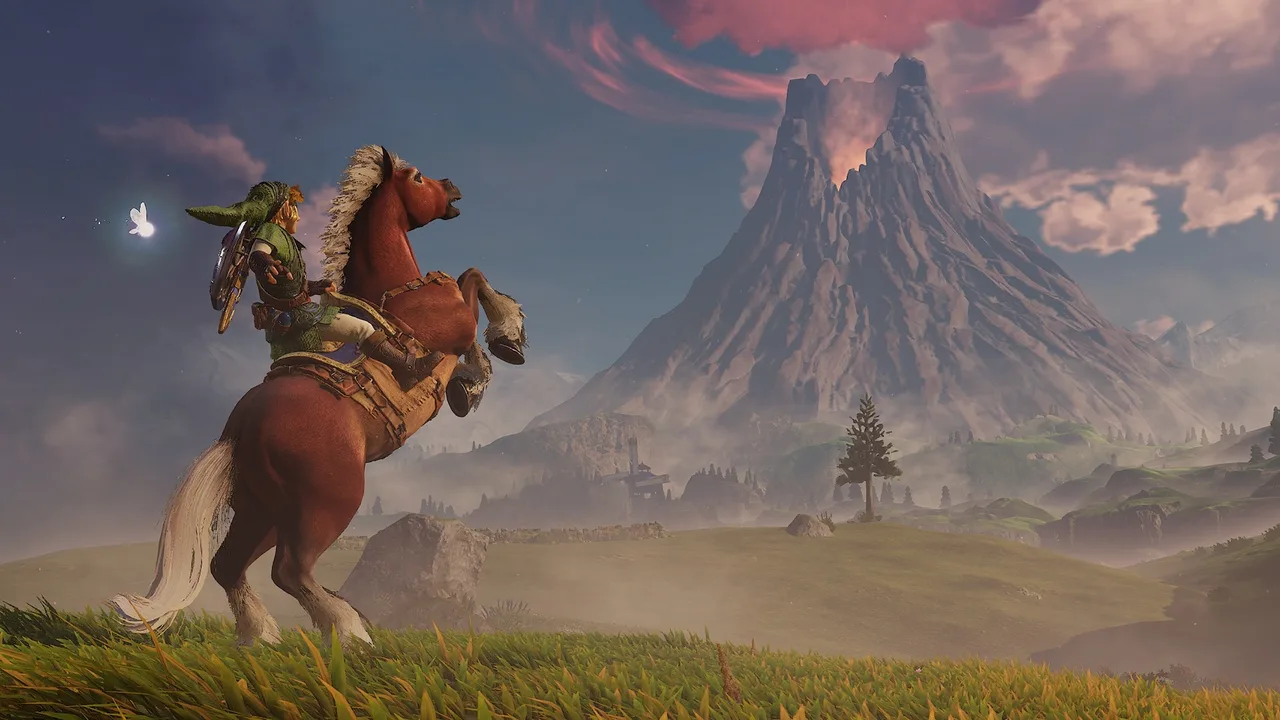
One of the first and most notable improvements is the motion. The Nintendo 64 original ran at an unstable 20 frames per second, the 3DS version lifted that to 30, and this one holds 60. Digital Foundry, the video site that measures how games perform, found it exceptionally consistent, with only tiny loading hiccups, at resolutions from 1080p to 1440p on a TV and 720p to 1080p in handheld mode. The reviewer at FutureFive, a New Zealand tech site, called the result "buttery smooth," a description with which I fully agree.
Numbers undersell it, though. Galloping across Hyrule Field at 60 frames feels like hearing a favorite record on the equipment it always deserved, and the rebuilt visuals reward you for simply standing still and looking around. Up close, the detail holds up to scrutiny, down to the weave of Link's tunic and the grain of the wooden fences at Lon Lon Ranch. From a distance, the world finally has the scale it always had in my imagination, with Death Mountain looming over Hyrule Field as a true volcano and Hyrule Castle rising with the weight of a real fortress.
Video: Nintendo's launch trailer for The Legend of Zelda: Ocarina of Time on Nintendo Switch 2
What I appreciated even more than the polish was the mood. Nintendo says the visuals have been completely overhauled, the cutscenes are fully voiced, and the score has been rerecorded with a symphonic orchestra in place of the original's synthesized sound. The world feels lived in rather than merely sharpened, with an atmosphere I never knew the N64 was straining to produce. The new art style also brings out how scary parts of this game really are.
The music deserves its own recognition, because it is where a remake like this can most easily go wrong. In one of Nintendo's "Ask the Developer" interviews, the developers explain that the team went back to the original N64 soundtrack to study how it was arranged instead of simply hiring an orchestra and hoping for the best. Not everyone is convinced. The Fader argues that the new recordings lean too heavily on the old arrangements by Koji Kondo, who composed the original score. I understand the complaint, but when a melody has lived in your head since the ninth grade, hearing it played by real strings feels less like timidity and more like being greeted by an old friend who finally learned to dress well.
That, ultimately, is why I think the remake is a fitting tribute. It doesn't try to overwrite my memories of 1998; it lets me walk through them with better lighting. It is the only Nintendo game in which I have ever noticed the lighting at all, let alone stopped to think about how great it looked.
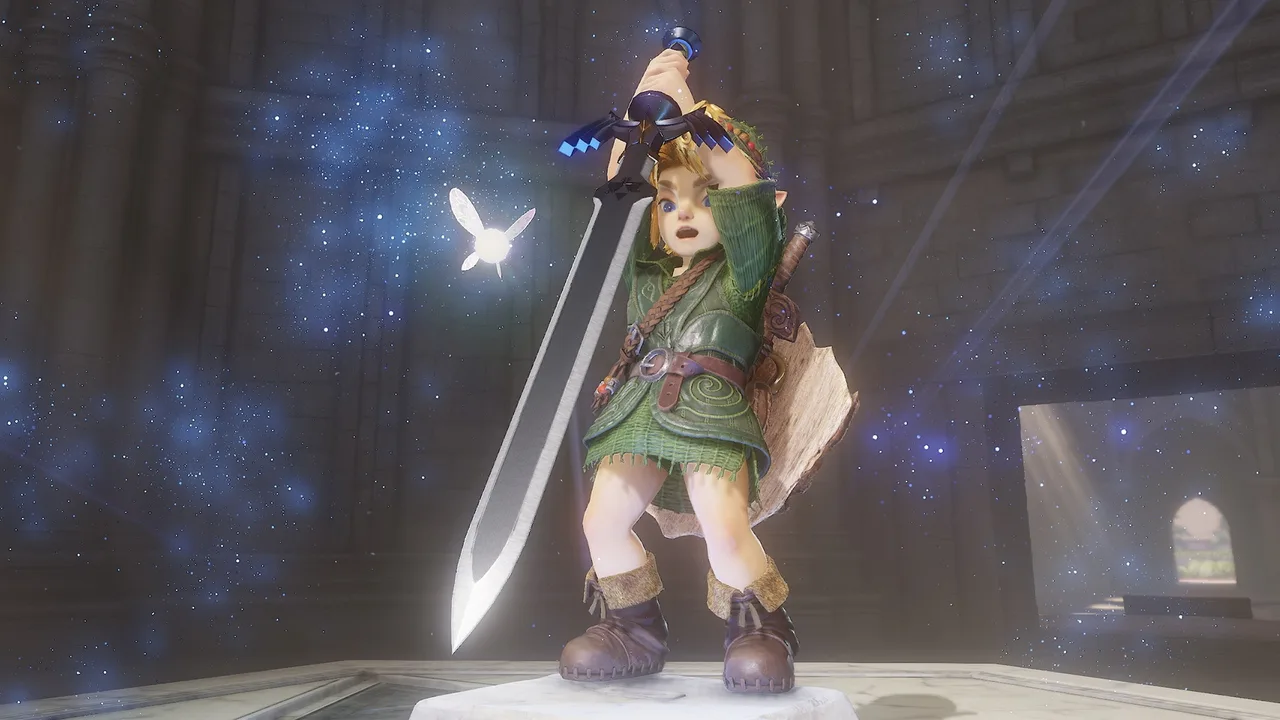
Image: Nintendo, from its game page.
If the remake stumbles anywhere, it is in its difficulty, or rather the lack of it. Critics agree, and difficulty is the complaint that comes up most often in reviews. The added conveniences, which make it simpler to know where to go next, don't help. Veterans in particular will find themselves breezing through dungeons that once demanded a notebook and a good deal of stubbornness. The bosses go down very easily too, and a few of them fell in a minute or two, before I could even admire how great those giant beasts looked.
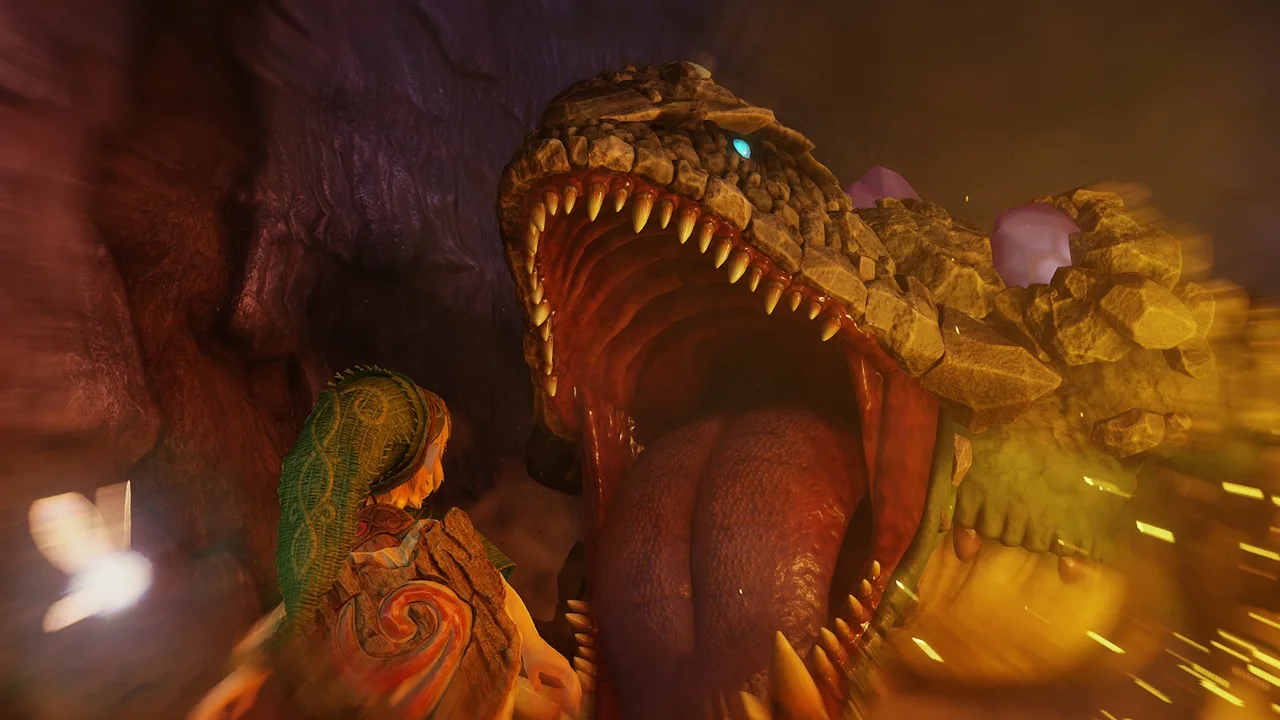
Image: Nintendo, from its game page.
There may be relief on the way. Dataminers, players who dig through a game's files, have reportedly found text pointing to a Master Quest mode, the remixed and tougher version of the game, and VGC reports that the files suggest it could arrive as downloadable content, sold separately after release. The files appear incomplete, and when IGN asked Eiji Aonuma, the longtime producer of the Zelda series, about it, he stopped well short of a promise. "I don't think that we would announce anything specific at this time," he said. Master Quest has a precedent, having first appeared as a bonus disc with the GameCube port and later in the 3DS version, so the speculation is not unreasonable.
For anyone who has never played it, the story begins in a hidden forest, among the Kokiri, ageless children who live under the watch of the ancient Great Deku Tree. One boy there, Link, has never had a fairy of his own, until one named Navi comes to find him and calls him out of the forest into the kingdom of Hyrule. What follows is a journey across mountains, lakes, and deserts, and, by way of the ocarina of the title, across seven years of time, as Link grows from a forest boy into the hero who must stand against Ganondorf, the desert king who means to claim Hyrule for himself.
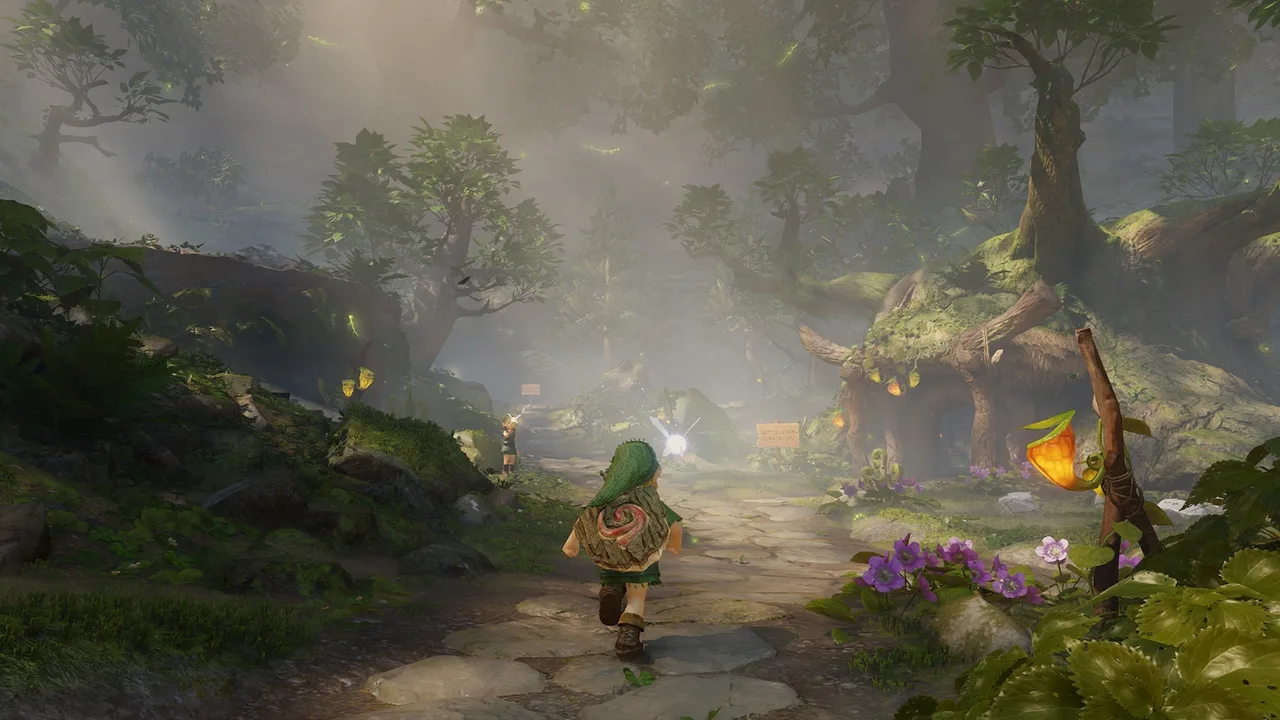
Image: Nintendo, from its game page.
The remake leaves that skeleton intact and adds some flesh to it. Cutscenes are now fully voiced, with expanded character dialogue, so the people of Hyrule finally sound like the ones I imagined in 1998, and the quieter story moments have more room to breathe.
Easy or not, the remake earns its place, because Nintendo timed it to the Zelda series' 40th anniversary, and an occasion like that calls for a game this faithful and this carefully made. For my part, I got a gorgeous and steady 60 frames per second, a beautifully rerecorded score, and a faithful return to the adventure that shaped how I think about games. Whether or not Master Quest ever arrives, I'll be playing this one again, and I suspect the fourteen-year-old who first picked up that N64 controller would approve.
Nintendo's remake of Ocarina of Time for the Switch 2 is a handsome, smooth, and affectionate update of a game I have loved for nearly three decades. It has a few shortcomings, chiefly that it is too easy, but I came away overjoyed to be back in an updated, beautiful-looking Hyrule.
Noozify's overall grade for the Ocarina of Time remake is an A−, the average of four report-card grades on an A-to-F scale.
| Subject | Grade | Comment |
|---|---|---|
| Graphics | A | Rebuilt visuals, a steady 60 frames per second, and lighting that made me stop and stare make this the best Hyrule has ever looked. |
| Controls | B+ | Manual jumping, sprinting, and a free camera bring Link's movement in line with modern expectations. It all handles smoothly, though some of the added assists make the adventure easier than it needs to be. |
| Story | A− | The tale itself is as sturdy as ever, and voiced cutscenes with expanded dialogue give it more life. |
| Audio | A | A fully rerecorded orchestral score and voice acting give the world real presence. A few critics wanted bolder arrangements, but to my ears the old melodies have never sounded better. |
| Overall | A− | The four grades average to about 3.8 on a 4-point scale. |